Gerard Yun

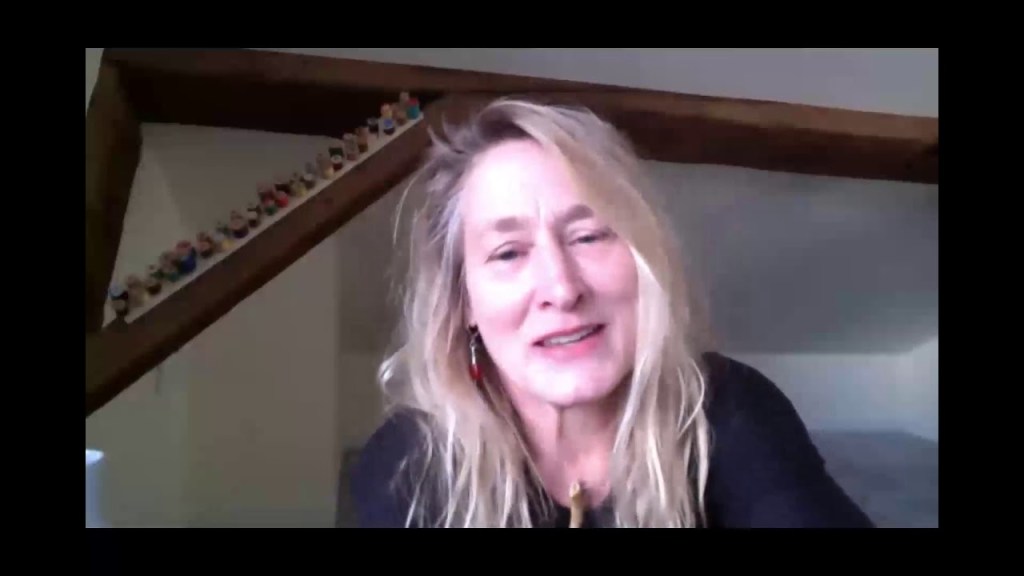
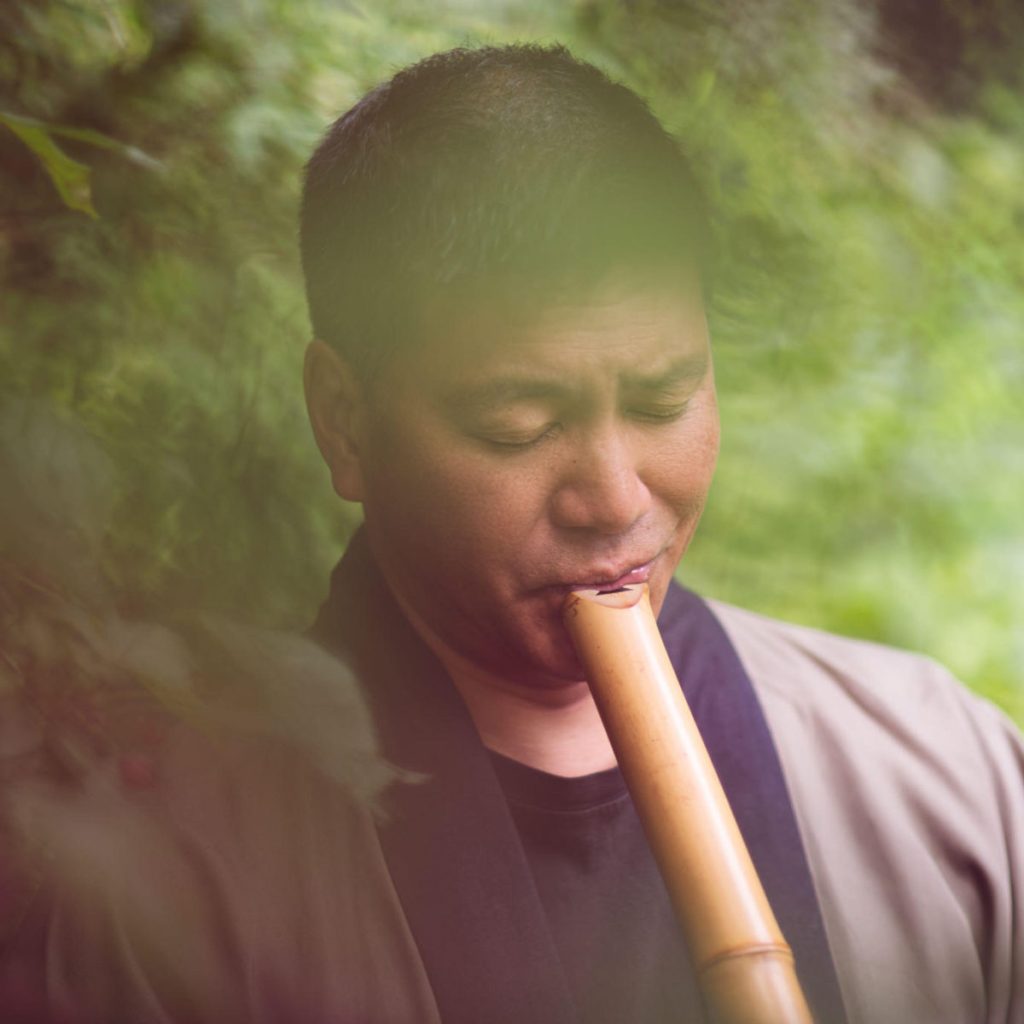
Dr. Yun teaches Community Music at Wilfrid Laurier University, specializing in, amongst other things, the Shakuhachi.

He is an intercultural,  contemplative musician, teacher, and scholar. A native of the Sierra Nevada Foothills of Northern California, he is a descendant of San Francisco and Jamaican Chinese with a background rooted in various musical traditions discovered and pursued alongside his formal training and professional work as a classical conductor. These include Japanese Zen Buddhist shakuhachi, Native American flute, Asian overtone singing, didgeridoo, West African kora and drumming. His scholarly interests focus on the intersections of music, spirituality and social justice through practices such as intercultural improvisation, restorative-contemplative musical forms, and performative eco-acoustics. At the juncture of emergence from the global pandemic, he seeks to reawaken awareness of relationships between humans, the natural world, and technology by combining scientific and musical modalities. Currently, assistant professor at Wilfrid Laurier University in Waterloo, Ontario, Dr. Yun is in demand as a clinician and workshop leader. During the pandemic, he hosted the “Authentic Voice” podcast and Martin Luther University’s “Contemplative Music Pause.” An advocate of teaching innovation, he is currently producing “The Listeners” podcast to support students and researchers seeking access and primary data into the interdisciplinary theories and practices of listening and as a precursor to a new course titled “Listening: Theories and Practice.” He teaches community music, contemplative arts, and social justice courses at both the undergraduate and graduate levels for the Faculty of Music and Martin Luther University College. Former director of both the University of Waterloo Choir and WLU’s Concert Choir, he is the founder of Conrad Grebel University College’s East-West Dark Horse Ensemble and Wilfrid Laurier’s Confluence Ensemble. As shakuhachi soloist and scholar, Dr. Yun performs and records with the Earth Ether Ensemble under the leadership of James Harley. He appears on Room 217 World Music series for Music Cares and various music apps, including Plant Choir’s biosonificstion app which creates generative music directly from houseplants. His latest composition projects feature seldom noticed or unhearable (with the unaided human ear) natural sounds (macroacoustics), and bio-electrical fields to generate new musical forms and structures. Dr. Yun serves as music advisor for Canada’s Plant Choir ® and president of the Community Music School of the Waterloo Region. 
Karen Houle

Dr. Karen Houle is a retired Philosophy Professor at the University of Guelph.  At this point in her life, she’s hellbent on using her immense caffeinated chaotic energy, her acquired social capital and her well-honed pragmatic attitude of “not giving a shit what people [think] anymore” to create and inspire joyful art and artful local socioecological post-humanist projects that are, as the poet Anna Bowen wrote, “tiny but everything”. Houle has 5 or maybe 6 of these projects bubbling on the proverbial stove at this very moment and would love to share the stove with others. No cooking experience necessary. 

All of Houle’s projects fall under the umbrella of “The Art of Soil Collective” ART + SOIL + COLLECTIVE (where “collective” does not mean just humans in a bunch, doing human-stuff for humans). In the best of all possible worlds – which is a refrain we say in academic Philosophy all the time, but really, what we should say is: In the best possible state of the one & only world and life we have –– these efforts will combine & make good use of their solid and varied political and ethical principles, their many acquired and diverse practical skills and, most of all, the unruly passions that rule Houle including:  food security, grandmothering wisdoms, plant philosophy, ecology, bush knowledge, environmental protection, organic farming, wordsmithing, crafting stuff from stuff, soil remediation, biodiversity, chopping wood, seed saving, pollinator support, composting, mental health gymnastics, bio-cultural diversity and lake swimming. 

Khashayar “Kess” Mohammadi

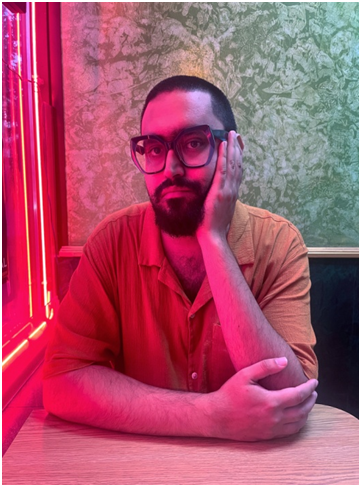
“Kess” is an Iranian born, Toronto based queer poet, translator and writer.

They were shortlisted for the 2021 Austin Clarke poetry prize, 2022’s Arc Poem of the Year award, The Malahat Review’s 2023 Open Season awards for poetry and they are the winner of the 2021 Vallum Poetry Prize. They are the author of four poetry chapbooks and three translated poetry chapbooks. They have released two full-length collections of poetry with Gordon Hill Press. Their full-length collaborative poetry manuscript G and their full-length collection of experimental dream-poems Daffod*ls were published by Pamenar Press in 2023.

Tillia Kooyman

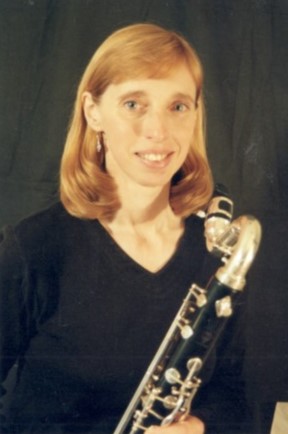
Tillia Kooyman is an active solo, chamber and orchestral musician, with interests in contemporary music, interdisciplinary works and acoustic ecology. An advocate for Canadian music, Tilly has premiered many new works by Canadian composers at the World Bass Clarinet Convention in the Netherlands, the international Bohlen-Pierce Symposium in Boston, ClarinetFest in Vancouver, NUMUS Concerts and the Open Ears Festival in Kitchener-Waterloo. The most significant influence in Tilly’s life has been the over three decades in collaboration with celebrated Canadian composer R. Murray Schafer on his Patria Cycle, a series of monumental works often staged in unique settings

Tillia’s education includes a Master of Music degree from the University of Western Ontario, an Associateship from the Royal Conservatory of Music, and advanced studies at the Banff Centre School of Fine Arts. A former student of James Campbell and Robert Riseling, Tilly has also studied ‘Deep Listening’ with Pauline Oliveros and free improvisation with Casey Sokol.

Tillia Kooyman’s “Music to Words”

27 April 2025 at 4:00 p.m.

An enduring friend of the Elora Poetry Centre, Tillia Kooyman performed a selection of musical pieces, which the audience could creatively set to words to be shared with the audience. Tillia played on different instruments, providing many opportunities for interesting thoughts.

Tillia’s bio:

Tillia Kooyman is an active solo, chamber and orchestral musician, with interests in contemporary music, interdisciplinary works and acoustic ecology. An advocate for Canadian music, Tilly has premiered many new works by Canadian composers at the World Bass Clarinet Convention in the Netherlands, the international Bohlen-Pierce Symposium in Boston, ClarinetFest in Vancouver, NUMUS Concerts and the Open Ears Festival in Kitchener-Waterloo. The most significant influence in Tilly’s life has been the over three decades in collaboration with celebrated Canadian composer R. Murray Schafer on his Patria Cycle, a series of monumental works often staged in unique settings

Tillia’s education includes a Master of Music degree from the University of Western Ontario, an Associateship from the Royal Conservatory of Music, and advanced studies at the Banff Centre School of Fine Arts. A former student of James Campbell and Robert Riseling, Tilly has also studied ‘Deep Listening’ with Pauline Oliveros and free improvisation with Casey Sokol.

LOVE BETWEEN  THE  WARS:   ACCEPTED & TRANSFIGURED

And Read to a Child, in conjunction with 100 Thousand Poets for Change (read by Peter and Nancy Scott) at 3:00 pm

100 THOUSAND POETS FOR  CHANGE

4:30 pm

29 SEPTEMBER 2024

Elora Poetry Centre and Gallery

7324 Wellington County Road 21


Walter Benjamin                        

E.E. Cummings                            

Heinle Sonnets by Walter Benjamin

E.E. Cummings Poems presented by Peter  Skoggard

Carl A. Skoggard reading from his translations of Walter Benjamin

Eric Neaves, tenor

Alan Macdonald, baritone

 Irene Gregorio, piano

Ask Kess!

Sorry for the delay in posting this blog, but the Elora Poetry Centre & Gallery promised to create a space for people to ask Khashayar (Kess) Mohammadi questions about their performance for the 100 Thousand Poets for Change event on Sept. 30. Those in attendance may recall that it was a busy day, Kess’s reading being followed by Dr. Gerard Yun playing the shakuhachi and then Choir in Motion performing in the garden, so we did not have the opportunity for a Q & A.

Anyhow, we thought we’d belatedly start things off with a query by a member of the audience that Carol received the next day, hoping that others will feel free to join the discussion:

In “Moes’ Skin.2.” [from Me, You, then Snow], “My head cradled sunlight to its resting place. / Did you ever have a face?” . . . What? I don’t get it. ”

However, the next day, this friend of the Elora Poetry Centre added the following: “Within the context of that particular poem, it makes ‘sense’ since it follows the changing countenance of his friend.” Does anybody have anything to add? Was this your reading, too?

Those of you who have a copy of Me, You, then Snow might want to have a look at this poem on p. 4 for the larger poetic context. Also, since the original question was later followed by a declarative sentence, perhaps it’s not the best way to open the Q & A, but we’re hoping that, in spite of the time that has passed, there might be some general questions about Kess’s poetics, themes, etc. His poetry has wonderful depths that we’d love to explore. Then again, those of you with access to the above collection and/or The Ocean Dweller, Saeed Tavanaee Marvi’s poems translated from the Farsi by Kess, might have some specific questions about individual poems.

Please leave your questions here and we’ll direct them to Kess for a response. We will then get back to you on this forum.